Today marks the twelfth annual National Hydrogen & Fuel Cell Day. What began as an idea in a conference room has evolved into an international celebration, showcasing the vast footprint and impact the technologies are making in the U.S. and around the world.
The Fuel Cell & Hydrogen Energy Association (FCHEA), the national industry trade association, first launched National Hydrogen & Fuel Cell Day in 2015, to raise awareness of hydrogen and fuel cell technologies at a time when the industry needed a boost. The date, October 8, was chosen as a nod to the atomic weight of hydrogen – 1.008, or 10/08.
Throughout the years, collective outreach from hydrogen and fuel cell companies, their suppliers and customers, as well as governments and other organizations and supporters have ranged from official resolutions and proclamations, facility tours and in-person events, product launches and news announcements, op-eds, customer and employee appreciation lunches, among other creative activities.
What Do We Have to Celebrate?
While Hydrogen Day marks its twelfth iteration this year, a milestone in itself, FCHEA has been working on advancing critical legislation, programmatic federal funding, codes, standards, and regulations, and stakeholder education for more than 35 years. And in those three plus decades, there has been much to celebrate.
Hydrogen and fuel cell technologies have evolved from the laboratory to a vast commercial industry now laser focused on scaling up to meet low-carbon power and energy demands. We are seeing massive billion-dollar investments in real-world development projects and partnerships for hydrogen production plants, manufacturing facilities, and multi-gigawatt (GW) fuel cell deployments. The global sector is also continuing to advance new and innovative pathways to produce, store, and utilize hydrogen as emerging markets open.
Policy Platforms to Build On
Despite recent headwinds to the unprecedented momentum lifting the industry a few years ago, over the past year we have still achieved significant policy wins in a tough political climate and are showing the value and benefit hydrogen and fuel cell technologies bring not just to the U.S., but to the global energy ecosystem.
Last summer, in the face of the elimination and defunding of critical tax credits, FCHEA coordinated an industry-wide, consensus messaging and advocacy effort. We grew our coalition not just by joining with allied organizations, but also by expanding bipartisan support on Capitol Hill.
Those efforts resulted in positive results for hydrogen and fuel cells in the One Big Beautiful Bill Act (OBBBA). This includes saving Section 45V Credit for Production of Clean Hydrogen from the chopping block. While the OBBBA now requires projects to commence construction before January 1, 2028, this is a significant improvement compared to initial drafts of the bill and provides a runway for companies to begin building projects and take advantage of the credit.
For fuel cells in particular, the OBBBA was a major win! The OBBBA restored eligibility for fuel cells to qualify for the Section 48E Clean Electricity Investment Tax Credit. The legislation enacted now allows all fuel cells to be eligible for the full 30% ITC, regardless of fuel used or technology employed. The credit remains in place in full through 2033, with a phase out to terminate the credit after 2035. This credit restoration couldn’t come at a better time as the demand for power opens up tremendous opportunities for fuel cells and already is resulting in billions of dollars of new deals, sales and installation announcements, and manufacturing expansions.
Beyond these measures, the OBBBA also maintained the Section 48E ITC for hydrogen storage property that FCHEA succeeded in getting enacted in the previous administration. This 30% credit covers hydrogen tanks, underground storage facilities, limited pipelines, and compression and liquefaction equipment.
Other credits in the OBBBA also support hydrogen – both production from fossil fuels, and utilization to generate derivative fuels, including Section 45Q, Carbon Sequestration, which was maintained until 2033, and Section 45Z, Clean Fuel Production Credit, which was extended through the end of 2029.
Hydrogen’s versatility continues to open new markets and build support across the country. It can serve as a fuel, provide power through fuel cells, and act as a feedstock for products such as ammonia and sustainable aviation fuel, while emerging resources such as geologic hydrogen offer another potential pathway for domestic production. The administration has taken notice as well, and the U.S. Department of Energy (DOE) outlined these emerging and growing market sectors for hydrogen and fuel cell technologies as priorities for the agency’s funding and research programs.
Later today, FCHEA is hosting a Circuits webinar, Powering the Path Forward, with Dr. Valerie Reed from DOE providing an overivew and insight into these priorities, followed by three of our members representing those areas of interest to DOE – data centers, fertilizer production, and geologic hydrogen..
More Work to Do
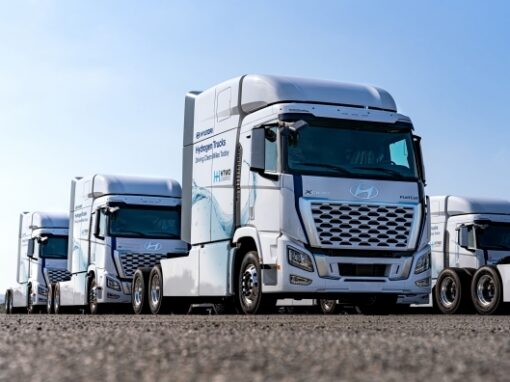
Even with the right policies in place, you need industry commitment to move forward. We are seeing just that in the U.S. with exciting developments across the country, including ribbon-cuttings and openings of new production and manufacturing facilities, deployments of fuel cell buses and trucks, and advancements in using domestic feedstocks, geologic resources, and technologies to generate, store, and use low-carbon hydrogen.
There is still more to do. FCHEA has always been a ‘boots on the ground’ and ‘in the weeds’ organization, and with our members and allies, will be ramping up efforts to extend the 45V tax credit to a more favorable begin construction date and implement more flexible guidelines for companies to roll out projects. We will also focus on permitting, regulatory engagement, and advocacy to new members of Congress as well as our long-standing work to ensure DOE has programmatic funding for its critical hydrogen and fuel cell programs.
National Hydrogen & Fuel Cell Day is the perfect platform to recognize all of the people and companies involved, and the innovations achieved, and then it’s right back to work. Lend your voice to spread the word using #HydrogenDay and amplify that voice by joining our coalition.