by Christian Mikkelsen
September 21, 2026
Fertilizer helped grow the modern world’s food supply. For more than a century, fertilizer has been made the same way: pull nitrogen from the air, pull hydrogen from a hydrocarbon, then force them together with an iron catalyst under enormous heat and pressure. In 2026, that century-old chemistry is facing a very modern test.
American farmers have felt that test directly. Rising natural gas costs, driven in part by growing U.S. LNG export capacity, have pushed up the cost of producing ammonia, urea, and urea ammonium nitrate (UAN). Nitrogen fertilizer prices are up more than 30 percent this year, and industry surveys suggest roughly seven in ten farmers could not get all the fertilizer they needed for the 2026 crop, a reminder of how much U.S. agriculture still relies on imports.
The federal government has moved quickly. USDA launched the $500 million Fertilizer Investment & Expansion for Long-Term Domestic Supply (FIELDS) Program in July, offering awards of $15 million to $150 million to expand domestic fertilizer manufacturing. USDA also issued a temporary Jones Act waiver to ease fertilizer movement between U.S. ports.
Fertilizer security and ammonia chemistry turn out to be part of the same equation. Ammonia is the largest established end use of hydrogen anywhere in the world, by volume, and how that hydrogen gets made determines how clean, and how domestically secure, the supply chain can be.
The Chemistry of Clean Ammonia
Nearly all ammonia is generated using the Haber-Bosch process: nitrogen from the air reacts with hydrogen over an iron-based catalyst at roughly 400 to 500 degrees Celsius and 150 to 200 atmospheres of pressure. N2 + 3H2 → 2NH3. This century-old reaction has changed little since, yet remains credited with feeding close to half the world’s population.
What has changed is where the hydrogen comes from, and that distinction is what separates grey, blue, and green ammonia. Grey ammonia reforms natural gas into hydrogen with no controls on the carbon dioxide (CO2) that occurs as a byproduct. Green ammonia skips natural gas altogether, making hydrogen instead using electrolysis, splitting water with renewable electricity. Blue ammonia sits in between, starting with natural gas but capturing and storing the CO2 rather than releasing the gas.
Most conventional plants make hydrogen through steam methane reforming: a two-step process built around a tubular reformer and an air-fired secondary reformer. The projects outlined below use something different: autothermal reforming, which uses oxygen instead of air. That produces a purer, more concentrated stream of CO2, and a pure stream is far easier and cheaper to capture. What sounds like a small engineering tweak is actually the main reason autothermal reforming has become the go-to technology for blue ammonia right now.
FCHEA Members Powering the Buildout
FCHEA members are leading efforts in producing ammonia and fertilizer in a more sustainable and localized manner:
The largest of these efforts is Blue Point, a $4 billion joint venture between FCHEA member CF Industries, fellow FCHEA member JERA, and Mitsui & Co. CF Industries holds 40 percent of the venture and runs the world’s largest ammonia production network. JERA holds 35 percent, and Mitsui holds the rest. The plant is going up at CF Industries’ Blue Point Complex in Ascension Parish, Louisiana, designed to produce about 1.4 million metric tons of low-carbon ammonia a year. Louisiana and the U.S. Army Corps of Engineers issued the last construction permits in July, and construction started in August with an official groundbreaking. Production is targeted for 2029, marking the company’s second decarbonization milestone in as many years: CF Industries finished a separate project at its Donaldsonville, Louisiana complex back in July 2025 that enabled low-carbon ammonia production there too.
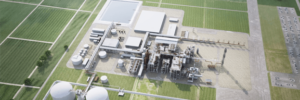
Figure 1. Blue Point Low-Carbon Ammonia Production Project depiction from JERA.
FCHEA member Topsoe supplies the technology behind that carbon capture. Blue Point will run on Topsoe’s SynCOR Ammonia™ autothermal reforming process, which is expected to remove more than 95 percent of the CO2 the plant generates. Topsoe is putting that same technology to work at a much smaller scale in Nebraska. In July, the company signed on to supply SynCOR Ammonia™ technology, equipment, and catalysts to J Westling & Co (JWC) for Project Meadowlark, a fertilizer complex JWC is building in Gothenburg. The plant will make roughly 500 short tons of blue ammonia a day for farmers in the region, notable because the plant is built purely for fertilizer, not for export or energy markets like most blue ammonia projects so far. Local production should also save farmers the $100 to $120 a ton they currently pay to ship ammonia in from the Gulf Coast.
For JERA, the investment secures fuel for its own decarbonization push in Japan. The company plans to export roughly 500,000 metric tons of ammonia a year from Blue Point to co-fire with coal at its Hekinan Thermal Power Station. JERA’s global CEO, Yukio Kani, has pointed to the project as the kind of long-term partnership central to the company’s strategy. JERA is also locking down how the ammonia gets there: in June, the company signed time charter agreements with Japanese shippers MOL and NYK for four very large gas carriers, the first long-term deployment of VLGC-size vessels built specifically for ammonia transport.
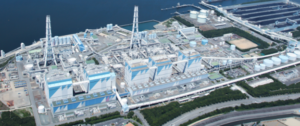
Figure 2. Hekinan Thermal Power Station.
FCHEA member Air Products is applying that same hydrogen-to-ammonia logic at a much larger scale overseas. The company serves as primary EPC contractor, system integrator, and exclusive offtaker for the NEOM Green Hydrogen Complex in Saudi Arabia, the world’s largest green hydrogen facility, expected to avoid roughly five million metric tons of carbon emissions annually once fully operational. Rather than shipping hydrogen gas directly, the project converts renewable hydrogen into green ammonia, the same chemistry described above, so the product can travel by conventional ammonia vessel to markets around the world.
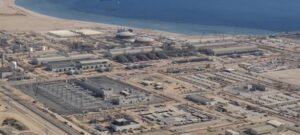
Figure 3. NEOM Green Hydrogen Complex depiction from NEOM Green Hydrogen Company (NGHC).
On July 30, Air Products finalized a marketing and distribution agreement with Norwegian fertilizer company Yara International for the ammonia volumes not converted back into hydrogen for European customers. Under the deal, Yara moves that ammonia through its existing global supply chain on a commission basis, an arrangement Air Products CEO Eduardo Menezes called the first fully integrated value chain for renewable ammonia. The agreement illustrates a broader point: as more low-carbon ammonia capacity comes online worldwide, moving that supply to market is becoming just as important as producing the ammonia in the first place.
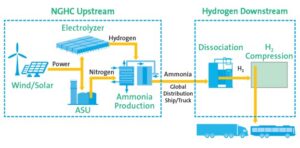
Figure 4. Depiction of NEOM Green Hydrogen Complex Pathway from Air Products.
The Infrastructure Connecting Producer to Farmer
Getting low-carbon ammonia from these plants to farmers also takes storage, handling, and transport equipment, and ammonia has to be kept at around minus 33 degrees Celsius to stay liquid, which is where FCHEA member Chart Industries comes in, now part of Baker Hughes after their merger completed in July. Baker Hughes secured contracts to supply compression and CO2 injection equipment for an ammonia project in West Terre Haute, Indiana, built by Wabash Valley Resources specifically for fertilizer demand in the Corn Belt.
A Maturing Pathway
These projects trace an evolving pathway for low-carbon ammonia: from mega-scale coastal plants built for export and power, to right-sized regional plants built locally to serve American farmers. The nitrogen, the hydrogen, and the iron catalyst have not changed in a hundred years. What is changing, plant by plant, is where the hydrogen comes from, a shift that reflects exactly the kind of domestic, lower-carbon alternative the hydrogen and fuel cell industry is built to deliver, giving agriculture a fertilizer supply farmers can count on for years to come.