November 18, 2025
As the United States (U.S.) strives towards its energy dominance goals, the Appalachian region, which includes parts of 13 U.S. states down the Eastern seaboard, has emerged to play a key role in its support. In particular, the tri-state region of West Virginia, Ohio, and Pennsylvania is leveraging its position as the largest coal and natural gas-producing region of the country to develop a hydrogen economy to support and transition its energy future.
The Appalachian Hydrogen Hub (ARCH2)
The Appalachian Regional Hydrogen Hub (ARCH2) was selected by the U.S. Department of Energy (DOE) as part of the $8 billion Regional Clean Hydrogen Hub program, and officially launched with an initial $30 million grant (of $925 million) but as of this moment, the Hubs program and additional funding is uncertain.
FCHEA Member Presence
Outside of the Hubs, there is a strong industry presence throughout the region, including several FCHEA members. Together, they illustrate how private companies are stepping up to build Appalachia’s hydrogen future:
- PDC Machines, headquartered in Souderton, Pennsylvania, manufactures diaphragm compression systems for specialty gas, chemical processing, and renewable energy companies worldwide.
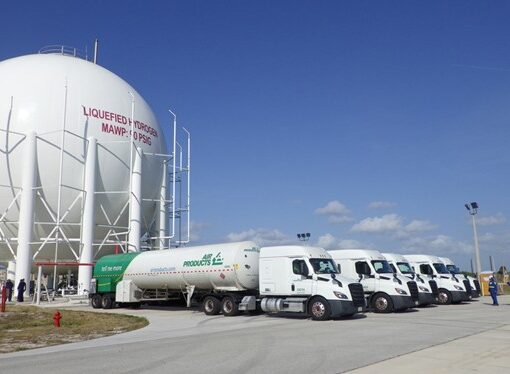
- Air Products, headquartered in Allentown, Pennsylvania, owns and operates some of the world’s largest industrial gas projects.
- Honda: In Marysville, Ohio, Honda recently began production of the 2025 CR-V e:FCEV fuel cell electric vehicle (FCEV) at its Performance Manufacturing Center.
- Wabtec Corporation, headquartered in Pittsburgh, Pennsylvania, is a leading rail equipment manufacturer. In late 2024, Wabtec announced plans to retrofit locomotives to run on hydrogen fuel at its Erie plant.
University Research and Development
Partnerships with regional universities and research centers are essential to advancing Appalachia’s hydrogen economy. These institutions not only drive cutting-edge hydrogen R&D but also serve as training grounds for the next generation of scientists, engineers, and skilled workers.
Pennsylvania
At Carnegie Mellon University, researchers are working on durable high power density fuel cell cathodes for heavy-duty vehicles. At the University of Pittsburgh, researchers are collaborating with Peoples Natural Gas and H Quest to produce and test hydrogen energy from natural gas. Penn State secured ARPA-E funding from DOE to explore geologic hydrogen generation and has studied hydrogen storage in unmined coal seams. Drexel University has advanced photocatalysis with a nanofilament material enabling solar hydrogen production. Lehigh University is connecting hydrogen to industrial decarbonization with research on repurposing metal waste for hydrogen-enabled steelmaking.
Ohio
At Ohio State University, chemical engineers developed a new method to convert methane into syngas and hydrogen in seconds, offering a potentially transformative production pathway. The University of Toledo is leading a $3 million initiative in northwest Ohio, led by a team of academics, industry leaders, and policy makers aimed at developing workforce training, program development, and building a strong talent pipeline for hydrogen production, storage, and the use of zero-emission technology.
West Virginia
West Virginia University (WVU) has long anchored hydrogen research that aligns with the state’s industrial and energy context. WVU has partnered with the National Energy Technology Lab (NETL) to create a hydrogen-flexible boiler for cement production. More recently, WVU researchers developed a micro fuel cell device that converts hydrogen to electricity for microelectronics.
National Labs
National Laboratories have also been instrumental in supporting hydrogen development in the region and across the country. NETL has been a key partner on hydrogen research across the value chain. NETL also manages the Reversible Solid Oxide Fuel Cell (R-SOFC) Program through a portfolio of research and development projects that address technical issues facing the commercialization of R-SOFC technologies and pilot-scale testing projects. In the past, NETL has partnered with FCHEA member FuelCell Energy on the deployment of a solid oxide fuel cell project in Pittsburgh, Pennsylvania.
***
Together, these initiatives and activities show how Appalachia is leveraging its energy resources, research institutions, and industrial base to become a cornerstone of the U.S. hydrogen economy. Building on its centuries of skilled energy labor, the region is well-positioned to make hydrogen a catalyst for a cleaner and more resilient energy future.