April 20, 2026
By Jennifer Gangi
Companies involved in aviation, like many other industrial sectors, are exploring ways to reduce the environmental footprint of air travel. While FCHEA has members involved in development and integration of hydrogen and fuel cell systems to power flights, there are also a large number of developments underway to use hydrogen as the key feedstock for producing other clean alternative fuels for airplanes. When considering hydrogen and aviation, the sky is the limit.
Sustainable Aviation Fuel (SAF) is an alternative fuel that can be made from a wide range of non-petroleum feedstocks in a few different ways. One method to generate SAF is Power-to-Liquid (PtL) which uses renewable electricity to produce hydrogen via electrolysis, which is then combined with captured carbon dioxide (CO₂ ).
Global SAF demand is projected to increase over the next ten years to more than 7.5 billion gallons per year. According to the International Air Transport Association (IATA), it takes ~450 kilograms of hydrogen to make one ton of SAF via the PtL process, so this presents an opportunity to grow an off-take market for hydrogen and make aviation less carbon intensive.
FCHEA members are utilizing their innovative technology and expertise to achieve big and immediate strides in SAF development across the world.
In the U.S., Topsoe was selected to deliver three of its advanced technologies, as well as catalysts and equipment, for NXTClean Fuels’ Port Westward project in Clatskanie, Oregon. The facility, expected to be operational by 2029, will produce up to 50,000 barrels per day of renewable diesel and SAF, making it the largest greenfield SAF project in the U.S.
Plug, in a strategic partnership with Edgewood Renewables, is providing engineering design, key product supply, fabrication, and project oversight to support the development and construction of Edgewood’s advanced renewable fuel facility in North Las Vegas, Nevada. The project is designed to process waste biomass feedstocks to produce SAF, as well as renewable diesel (RD) and biomethanol, while utilizing, within its process, renewable natural gas (RNG) and low-carbon hydrogen.
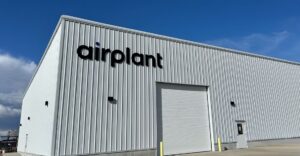
Twelve has completed AirPlant™ One, the company’s inaugural SAF plant located in Moses Lake, Washington, which uses patented PtL technology to produce SAF with an electrochemical process to convert CO2 and green hydrogen (sourced from water). The company has attracted investments and partnerships with major airlines interested in using SAF to reduce carbon emissions.
AIRCO is another FCHEA member utilizing CO2 and hydrogen to create SAF. The company develops and licenses the AIRMADE® PtL technology to partners to produce SAF at their own production facilities. AIRCO is also operating an integrated AIRMADE® Fuel plant at its headquarters in Brooklyn, New York.
AIRCO’s technology is being used in the company’s newest offering, the “MAD” Fuel System, which is a deployable, containerized platform that can produce jet fuel or diesel-equivalent fuel (Jet A-1 and DS-1) directly at the point of use. AIRCO has received around $70 million in funding for the development of the MAD Fuel System and is working with various offices within the Department of War, including the Department of the Air Force (DAF), which is part of the Air Force Research Laboratory. The most recent award was $15 million from AFWERX, the innovation arm of DAF.
Topsoe has multiple projects underway in other countries as well. The company announced its sixth SAF contract in China, recently selected to provide its Hydroflex technology with a capacity 300,000 tons of feedstock per year to Tangshan Jinlihai, a developer and provider of renewable fuels, for its industrial hub,
Last October, Topsoe and partner Sasol signed a cooperation agreement with the German Aerospace Center (DLR) for the construction, operation and R&D activities of DLR’s e-SAF production demonstration plant at the Leuna Chemical Complex in Germany. Currently under construction, the plant is expected to produce 2500 tons of e-fuels per year, using renewable feedstocks including green hydrogen.
Topsoe also signed a Front-End Engineering and Design (FEED) agreement with Carbon Neutral Fuels (CNF), evaluating 120 megawatts (MW) of Topsoe’s SOEC electrolyzers for CNF’s commercial-scale e-SAF Project Starling in Workington, United Kingdom.
The plant is expected to produce 25,000 metric tons of e-SAF per year. Construction is planned for 2028 with operations expected in 2031 pending final investment decision.
Johnson Matthey (JM) was also selected by CNF to participate in Project Starling, which is evaluating the use of wastewater as a feedstock, using JM and partner bp’s FT CANS technology to convert captured CO2 and water into synthetic kerosene (FT-SPK), which will be blended with conventional jet fuel to make SAF.
Hydrogen can play an important role in reducing aviation emissions through supporting SAF production. FCHEA is working to make sure critical tax incentives, including the 45V clean hydrogen production credit and 45Z the clean fuels production credit, are in place and workable for industry to keep advancing this sector here in the U.S.
Above is just a snapshot of the wide range of investments being made by the hydrogen sector to support SAF production. The hydrogen industry is very excited to be a major contributor and see this sector take off.